


Follow us today...




Few names inspire the same confidence as Toyota. For decades, the brand’s reputation has been built on quiet competence and mechanical longevity, the kind of dependability that turns customers into disciples.
The Tundra, Toyota’s full-size pickup, has long been the company’s answer to Detroit’s big iron, a machine designed to work hard, last forever, and ask for little more than oil and respect. But when one such truck ignited in the pre-dawn hours of a July morning, that carefully cultivated trust was reduced to cinders along with the vehicle itself.
“On July 10 of 2025, we were woken by our neighbor at 4:30 in the morning, who told us that our truck was on fire. The Blink camera shows the area where the fire started. We had 2 inspections - one of which was hired by Toyota. We contacted the Toyota Brand and reported it immediately to NHTSA. The first inspection showed no fault of ours, and the 2nd inspector says this wasn’t the first Tundra fire he’s inspected. My husband asked if we could get a copy of the report. He said no because his report goes to Toyota legal, and they needed to tweak the report with their legalese. The video shows the fire coming from the driver's side in the gas tank area; however, the inspector spent a lot of time in the dashboard area where the wireless chargers used to be. Fast forward 3 months, @ToyotaUSA brand said that the engineers couldn't determine how the fire started; therefore, we are responsible for this POS. We don't even know if insurance is going to settle with us. If they do, we are out the deductible, the difference between what the insurance pays and the cost of purchasing a new truck. We had to spend thousands of dollars repainting our garage and replacing windows that were damaged. And we had thousands of dollars of personal property in the truck. Out $$$. With no concern from this company, with which we have purchased 8 Toyota products over the last 30+ years. Buyer Beware. You may be buying a ticking time bomb. Toyota’s engineering and company hide behind lawyers.”
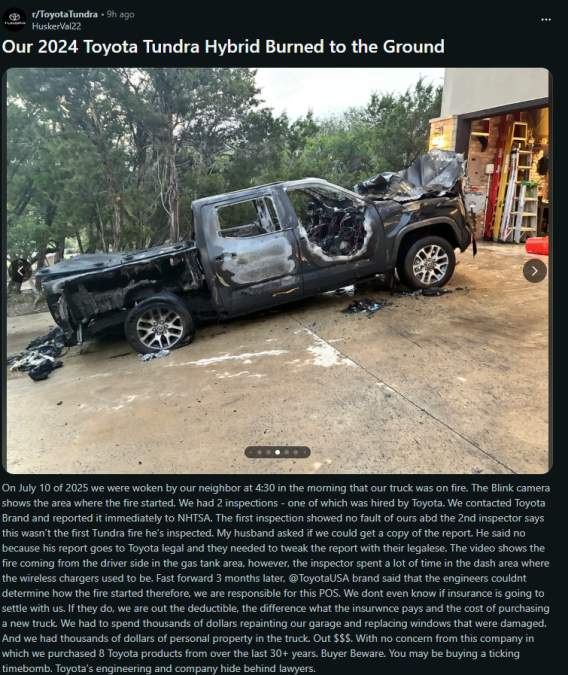
It’s difficult to read that account and not feel the gut-punch behind it. This isn’t the rant of a casual buyer or a disgruntled leaseholder. This is a loyalist, a person who has spent over three decades and eight vehicles with the same brand, whose garage has become a quiet shrine to Toyota reliability. The heartbreak isn’t only from the loss of the truck, but from the sense that the bond of trust between owner and manufacturer has been fractured.
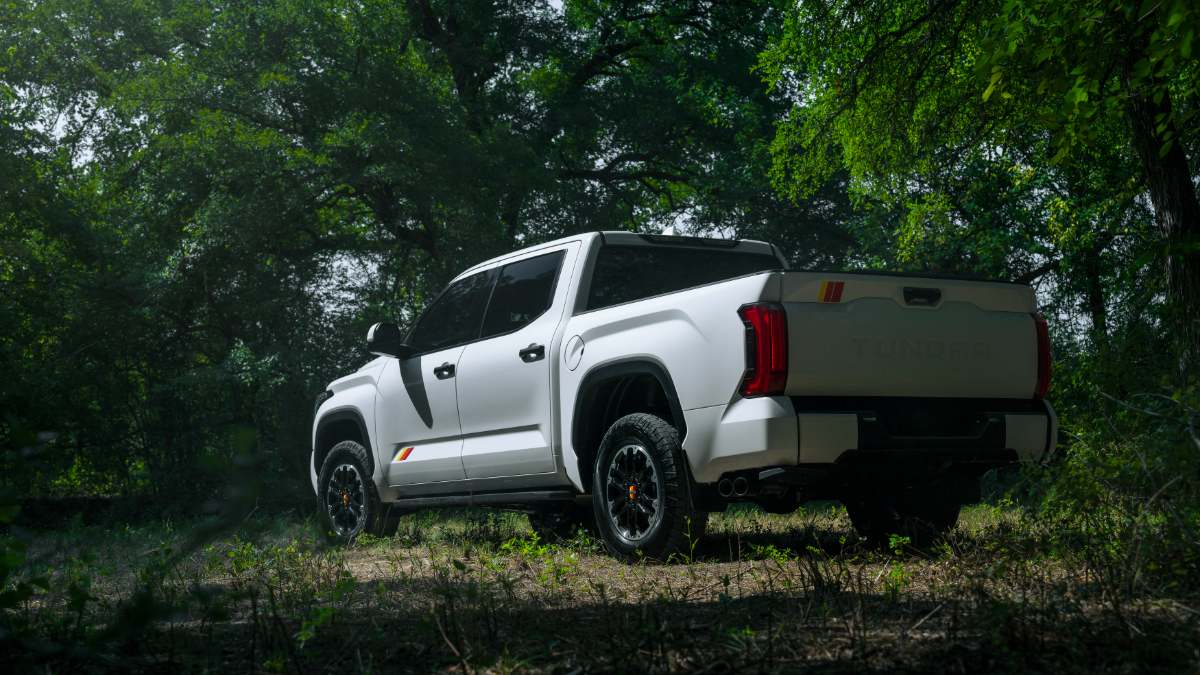
To be fair, fires happen. They’re rare, but they’re part of the unpredictable chemistry of complex machinery. A modern vehicle is a rolling network of fuel lines, batteries, sensors, wiring harnesses, and power inverters. Any of them can fail, sometimes spectacularly. Toyota’s hybrid systems, in particular, have been in production for more than two decades without a widespread record of combustion-related failures. As one commenter on the r/ToyotaTundra thread pointed out, “Toyota hybrids burning randomly has not been a thing in the 2+ decades they've been out there.” That historical record counts for something. Yet even a single exception can feel like a betrayal when it happens in your own driveway.
How Vehicle Fires Start
- Vehicle fires often start in the engine compartment due to fuel, oil, or electrical system failures. Friction, short circuits, or leaking fluids can ignite when exposed to heat or sparks.
- Modern vehicles with complex wiring and lithium-ion batteries face new risks, as damaged cells can cause thermal runaway events. Proper insulation and cooling systems help mitigate these dangers.
- Mechanical issues such as worn-out fuel lines or overheating engines are among the most frequent triggers. Lack of maintenance and age-related deterioration increase the likelihood of combustion.
- In electric vehicles, fires are rare but harder to extinguish because battery packs can reignite after being cooled. Fire departments now train specifically for EV-related incidents.
The investigation, according to the owner’s post, brought little clarity. Two inspections were performed, one of them by Toyota’s own representatives. Yet the results were inconclusive. When the owner requested a copy of the findings, they were reportedly told that the report had been sent to Toyota’s legal department for review. There’s nothing inherently nefarious about that; corporations follow protocol, but it can feel like stonewalling to someone who just watched their truck and garage go up in smoke. One Reddit user offered a level-headed reminder: “'We couldn’t confirm we were at fault for this fire' doesn’t mean they’re blaming you necessarily.” Fair point, but semantics offer little comfort when your insurance company is still deciding whether to pay out.
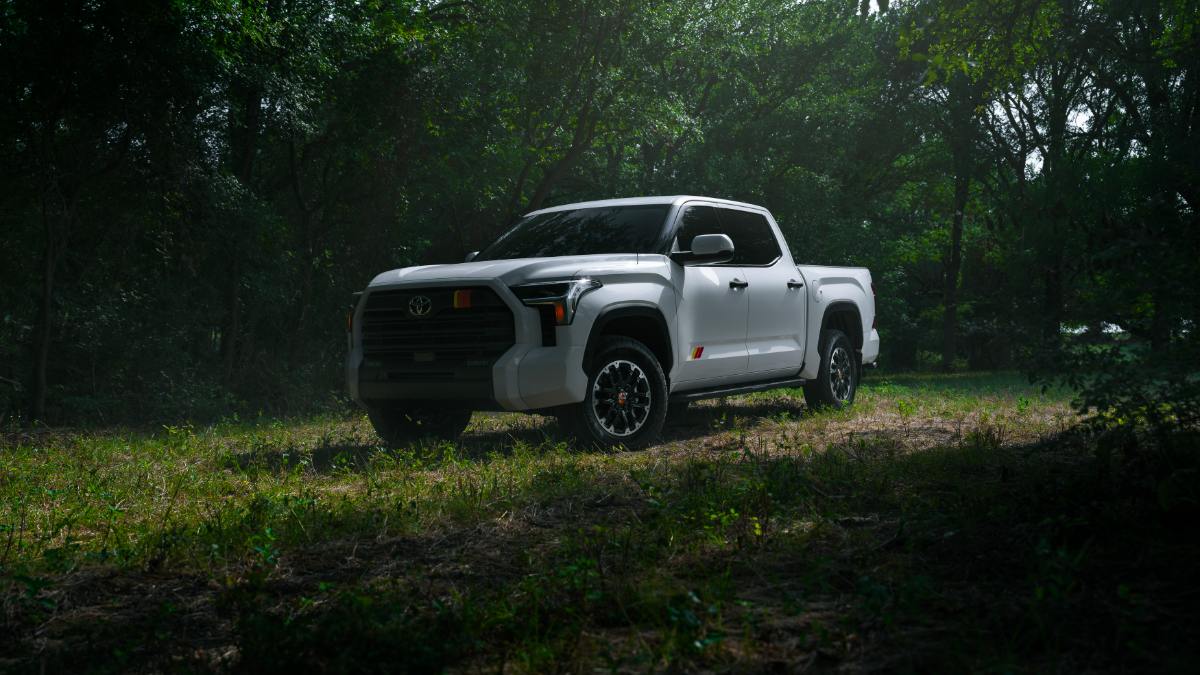
Others were quick to point out that insurance should step in. “Everything you’ve described for damages falls under vehicle and/or home insurance. That’s why we get insurance,” one commenter said. Another added, “Your homeowners' insurance should cover windows, finishes, and random stuff that was in the truck.” Both statements are true. But the owner’s reply was equally valid: deductibles, depreciation, and replacement costs still leave them thousands in the hole. No policy can fully reimburse what’s lost when trust evaporates.
American Truck Usage Rates
- Pickup trucks are among the most popular vehicles in the U.S., with millions sold annually for both work and personal use. They dominate rural and suburban markets where towing and cargo capacity are valued.
- While originally designed for labor-intensive tasks, modern trucks now serve as daily drivers due to improved comfort and luxury features. This shift reflects changing consumer preferences toward versatile, larger vehicles.
Statistically, Toyota will come out of this unscathed. The company builds millions of vehicles each year, and a single fire, even one that draws headlines, barely moves the reliability needle. But this incident highlights something deeper than a mechanical failure. It exposes the fragile human element that underpins brand loyalty. We expect machines to break; what we don’t expect is for the institutions behind them to feel distant when they do.
Toyota may not be at fault here. The company may never determine what actually sparked the fire. But to the owner who spent thirty years trusting a badge that promised unflinching dependability, the result feels the same. Fires can be extinguished. The erosion of faith is harder to put out.
Image Sources: Toyota Media Center
Noah Washington is an automotive journalist based in Atlanta, Georgia. He enjoys covering the latest news in the automotive industry and conducting reviews on the latest cars. He has been in the automotive industry since 15 years old and has been featured in prominent automotive news sites. You can reach him on X and LinkedIn for tips and to follow his automotive coverage.
Follow us today...


Comments
Toyota should pay if they…
Permalink
Toyota should pay if they can't determine the fault of.The owner.The problem I see here is overzealous stupid employees with no eye for the future and no imiginationand
ong term revenue.If the news would come out that Toyota gave the owner without hassle a brand new truck.That would be an advertisement multiple times worth the value of a new truck.
I had a Toyota Tacoma for 15…
Permalink
I had a Toyota Tacoma for 15 years until it tried to kill me with the gas pedal breaking and going all the way down on a wet pavement. The only thing that saved my life was a guard rail. I decided to purchase a used 2020 Tacoma in 2022. In 2023 my backup camera stop working. In 2025 my low tire master sensor went haywire. I loved my previous Tacoma, but I am concerned about this new one with all the electronics going bad on it. I know Toyota has a recall on their 2022 to 2025 Tacoma for faulty backup cameras. I wish they would bring it down to 2020 so I can get my fixed.